biography
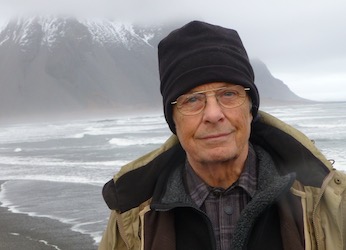
Tim Rudman began his involvement with Photography in the 1960’s whilst studying medicine in London. He taught himself to print in the darkroom and, with his distinctive style of Black and White printing, quickly gained some early recognition and publication. His work has been exhibited in over 50 countries around the world, gaining many awards.
For many years he pursued his two loves of medicine and photography together, but now devotes his time to photography. Today he is respected internationally as a photographer, printer, author, educator and authority on darkroom printing and toning techniques. His name is particularly linked with his pioneering work in the beautiful process of Lith Printing, a process in which he is widely regarded as the leading authority and practitioner. His work and publications in this field are held to be primarily responsible for its current popularity as a photographic art form around the world.
Rudman has been a regular writer and lecturer, conducting darkroom workshops in Britain, Ireland, Spain, Australia, Canada and America. His four books on photographic printing and toning techniques are critically acclaimed and are widely used in teaching establishments. His work has been published extensively in many countries.
Rudman is a member and past Chairman of The London Salon of Photography, A Life Fellow of The Royal Photographic Society of Great Britain. He was a founder member and subsequent Chairman of the Royal Photographic Society’s Distinctions Panel for Photographic Printing and has been widely involved with the Society's Distinctions assessments for some 35 years. He was awarded the Society's Fenton medal and Hon life membership in 2013.
He is a member of the Arena group of photographers in the UK, the Freestyle Advisory Board of Photographic Professionals in Hollywood, California, USA and is an advisor to the Lishui International Handmade Photography Centre, Lishui, China. His work is represented in a number of permanent and private collections around the world, including the British Royal Family and the renowned RPS Permanent Collection housed in the Victoria and Albert museum in London UK.
His photographic prints are individually hand crafted in the darkroom using silver gelatine materials processed to the highest archival standards and toned mainly with selenium, gold and sulphides, both for aesthetic reasons and to ensure archival permanence.
He is currently represented in Melbourne, Australia by Gold Street Gallery
memberships & affiliations
The Royal Photographic Society
- Fellowship in Visual Art
- Awarded Fenton Medal and Hon life membership 2013
- Fellowship Review Board 2010 - 2020
- Distinctions Adjudication Panel in Photographic Printing :
- Founding member (1988 – 2004)
- Chairman (1996 – 2004) - Distinctions Adjudication Panel in Visual Art:
- Member (1988 – 2007) - Distinctions Adjudication Panel in Landscape:
- Member (2020 – 2023) - Selector - Tyng Permanent Collection (1999 - 2004; 2013 - 2019)
Hon. Lifetime Fellowship of British Professional Photographers Association
Fellow Royal Society of Arts
London Salon of Photography: Past Chairman & current member
Freestyle Advisory Board of Photographic Professionals, Hollywood, California
Member of Arena
Associateship: India International Photographic Council, for services to photography
Distinction of Excellence of the Federation International de l’Art Photographique
publications
Books (Author)
- ‘The Photographer’s Master Printing Course’ (1994). A critically acclaimed best seller. Multiple reprints. Revised 2004
- ‘The Master Photographer’s Lith Printing Course’ (1998). The first and still the only instructional book on this process. Multiple reprints. SOLD OUT
- ‘The Master Photographer’s Toning Book’ ('The Photographer’s Toning Book’ in USA). (2002).Critically acclaimed as the most comprehensive toning guide in print. Reprinted Sept 2010. read review. SOLD OUT
- ‘World of Lith Printing’ (2006).The only published international collection of Lith prints and techniques . Soft back and limited edition hard back with hard slipcase. SOLD OUT
- Exhibition book 'The Colourful World of Black & White' (2009). SOLD OUT
- 'Iceland. An Uneasy Calm. 2015. Toned monochrome prints from Iceland. Foreword by Bill Schwab. Introductory essay by Tim Rudman. 98 quad tone reproductions. 3 editions. SOLD OUT
- Exhibition book 'Lith Works'. 2022.
Books (Featured/contributed) include
- Experimental Photography Workbook (pending 2022). Prof. Christina Z Anderson. Routledge.
- 'Workshop Stories'. Elizabeth Opalenik. (2021)
- London Salon of Photography, Members Favourites (2020)
- 'The Photographer's Vision'. Micheal Freeman. Ilex Press (2011)
- 'Portfolio Two'. Royal Photographic Society (2010)
- 'Portfolio Three'. Royal Photographic Society (2013)
- 'The London Salon of Photography Centenary 1910 - 2010'
- ‘The Darkroom Cookbook’ 3rd Edn. Guest contributor / editor. Anchell (2008)
- 'Portfolio One’. Featured Guest Artist. Portfolio & interview. Royal Photographic Society (2007)
- 'Arena editions: Tim Rudman'. (2017)
- ‘Arena Portfolios’. Arena (2008)
- ‘Art and Artists: Alternative Photography’. Fabbri (2006)
- ‘Fine Art Photography’. Hope/Rotovision
- ‘Photographic Printing’. Nocon
- ‘Darkroom Basics...and Beyond’. Hicks & Schultz
- ‘Landscapes, B&W’. Hope/Rotovison
- ‘Portraits & Figures’. Hope/Rotovision
- Photography Year Books. Various. Fountain Press
Other Publications
Tim’s photographs, books, technical articles and series have been featured in many publications around the world, including:
- The Sunday Times; Photo Art International (resident feature writer 1997 - 2003) ; Amateur Photographer (feature writer); Silvershotz International Journal of Fine Art; The Photographic Journal`: Practical Photography; Landscape Photography; Black and White Photography: Photography Monthly: Ag; Exposures; Creative Photography; Darkroom User; Camera and Darkroom; PIC; Black and White Enthusiast; Mono; Visual Art; Creative Eye; Elements: Surrey Monocle; Photovision (USA); Photo Techniques (USA); Emulsion (USA); South African Journal of Photography; Better Photography (Australia); Australian Photography; Foto (Denmark); Foto Creativ (Germany); SLR; Unblinking Eye (Internet); Alternative Photography (Internet) and many others.
His photographs have been used in a number of advertising campaigns in UK and America.
teaching & lectures Currently retired.
Tim's workshops to educators, professionals, students and hobbyists alike run around the year visiting many countries. These popular events specialise in darkroom printing and toning techniques for artistic expression and personal development.
He has taught at many centres, including The Ansel Adams Center in California; Glendale & Santa Monica Colleges, California; The Creative Center of Photography, Hollywood; The Photographic Center North West, Seattle; The Photographers Formulary workshop center, Montana; University of W. Sydney, University of NSW, Australia; University of Tasmania, Thames Valley University, London; and many other centers in Canada, Spain, Ireland and the UK.
exhibitions; new & recent
Selected solo exhibitions
Most recent:
West Pier Trust. Brighton.'The End of the Pier' July - September 2024.
Other:
Gold St Studios & Gallery. Trentham E, Melbourne, Australia. 'Lith works' July 2022 - 25th September 2022
Aberystwyth Arts Centre, Wales, UK. 'Iceland - An Uneasy Calm' September 15th - November 11th 2018
Dimbola Museum Galleries, Isle of Wight, UK. 'Iceland - An Uneasy Calm'. April 22nd - July 17th 2017
Banbury Museum Art Gallery, Oxfordshire, UK. 'Iceland - An Uneasy Calm'. December 2nd - January 20th 2018
Gold St Studios & Gallery. Iceland goes 'down under'. East Trentham, Melbourne, Australia. 28th June - 20th August 2017
The Colour Factory, Melbourne, Australia, September 7th - Spetember 30th.
Dye House Gallery, Bradford, UK, 'Iceland - An Uneasy Calm'. January 12th - February 17th 2017
The Lightbox Gallery & Museum, Woking, UK. 'Iceland - An Uneasy Calm'. April - July 2016
Fox Talbot Museum Gallery, Lacock, National Trust, 'Iceland - An Uneasy Calm'. January - July 2016
Blanco Negro, Sydney, Australia. April 2015: 'Tim Rudman. Twenty Pieces of Silver'. Curated selection of silver gelatine prints from the Gold Street collection.
Silverprint Gallery. London UK: 'Treeworks'. A selection of toned silver gelatine B&W and lith prints from the 'Treeworks' collection. April 3rd to May 9th 2014
Bangwallop Gallery. Salcombe, Devon, UK. 'A Walk on the White Side'. Sept. 21st - March 2014
Rook Lane Gallery, Frome, UK. Shared 'ARENA' exhibition. 21st Sept - 4th Oct 2013.
Gold St Studios & Gallery Australia. 'A Walk on the Whte Side'. 15th August - 6th October 2013
Clark Gallery, The Gold Museum, Ballarat, Australia.'Silverworks'. Aug 21st - Nov 27th 2011.
Bangwallop Gallery. Salcombe, Devon, UK. 'Treeworks' (part of). April 1st - July 17th 2011
Gold St Studios & Gallery. Australia. 'Iceland - an uneasy calm' Feb 27th - April 27th 2011
Gold Street Studios and gallery. Melbourne, Australia. 'Tree Works'. October 11th January 29th 2011
Meyer Gallery, Sydney, Australia. 'Iceland, an uneasy calm.' September 30th 2010 for 4 weeks.
The Manor House, Godalming, UK. 'Tim Rudman. The Colourful World of Black and White’ (August 2009 - July 2010)
The Lightbox Gallery, 'Tim Rudman. The Colourful World of Black & White'. Woking (May 19th - July 26th, 2009)
National Exhibition Centre, Birmingham (2007)
Gallery on the Green, Warlingham (2006/07)
Fenton House Gallery, The Royal Photographic Society, Bath (2006)
The Freestyle Creative Center for Photography Gallery, Hollywood. (2005)
PMA. Sydney, Australia. (2000)
Selected shared exhibitions
Gold St Studios & Gallery. Trentham E, Melbourne, Australia. 'The Print Exposed'. February 4th - April 5th, 2026
Gold St Studios & Gallery. Trentham E, Melbourne, Australia. 'The Print Exposed'. March 1st - May 21, 2023
Lishui Photography Museum, Nanjing, China. 'Reflections and Innovations'. October 2021
Gold Street Gallery. Victoria, Australia. 'The Print Exposed'. July 5th - November 29th 2020
Lishui Photography Museum, Nanjing, China. Handmade prints. November 8th - December 8th 2019
Colour Factory Gallery, Victoria, Australia. 'Four by Four'. September 8th - September 30th 2016
Sidcot Arts Centre, Somerset. Selectons from 'Treeworks" and 'Walk on the White Side'. Nov 1st to Dec13th
Silverprint gallery London UK. Exhibition of UK's leading printers using the new Ilford's Multigrade papers. Dec 19th 2013 to Feb 14th 2014
Menier Gallery, London, UK. Shared 'ARENA' exhibition. 10th - 22nd June 2013.
Royal Albert Hall, London. Royal PS selected members exhibtion 2013
Salisbury Galleries. Salisbury 2012
Bangwallop Gallery, Salcombe, Devon. Represented artists show. Dec 2011-Jan 2012
Meyer Gallery, Sydney, Australia. 'Portfolios' April 28th to May 23rd 2010
The Print Exposed 2009. Trentham Victoria, Australia (Sept/Oct 2009)
Guildford House Gallery, Guildford (Nov/Dec 2008)
Independent Photographers Gallery, Battle (July/August 2008)
‘Five Fellows to China’ Touring exhibition, China (2007)
The Camera Club Gallery, London (2007)
London Salon members exhibition, Letchworth Museum Gallery (2007)
RPS members exhibition, touring (2007/08)
Guildford House Gallery, Guildford (2006/07)
Salisbury Galleries, Salisbury (2006)
Naturescapes. Gallery on the Green, Warlingham (2006)
RPS Distinction Panel Members Panel Exhibition, R.A.C., Pall Mall, London (2006)
RPS members exhibition, touring 2005-06
Salisbury Galleries, Salisbury (2005)
Gold Street Studios, Sydney, Australia (2003-04)